Cincinnati is leading the way in the Midwest and, possibly, nationally in its new "drones as first responders" program. When someone calls 911, dispatchers regularly call out over police radio for an available drone to respond to the scene.
After Cincinnati police launched the program, I became curious how the drones were being used. When I saw that the department was publishing its flight paths through an online dashboard, albeit with little detail, I realized there was an opportunity to dive into the data.
I created a script to download the flight paths from the dashboard on a daily basis over the past three months. After reviewing the data, which I have made available on GitHub, I've figured out a great deal about where, when and why Cincinnati's police drones are flying.
To learn more for this story, I shadowed the drone squad and spoke with the unit's leader, Sgt. Jay Kemme. I also had conversations with drone experts, community leaders and privacy advocates about the program and others like it.
While I was writing this story, I thought back to the DJI drone my father and I used to fly around near our home and on vacations. I thought the scenic view from 400 feet up was great for a photo. It turns out, that perspective can also be great for law enforcement.
And as Kemme told me, this is only the start.
Use the three tabs below to view the three pieces of the project.

Cincinnati police's $4.8M drone program takes off. How does the eye in the sky work?
Nov. 30, 2025 | OriginalWhen a man fled from probation officers and nearly struck one with his car, the chase was on. The man led police past Cincinnati's West Side, eventually abandoning his car and running into the woods.
He plunged into the Ohio River near Shawnee Lookout, hoping to flee to Kentucky. By the time officers saw he was in the water, it would have been smooth sailing for the fugitive.
But 200 feet in the air above him was a police drone piloted by an officer far from the scene, trailing him as police came to the river line and prepared to pull him out.
The early October chase was just one of more than 3,000 drone flights launched since July, part of a broader initiative by Cincinnati police to use drones as first responders.
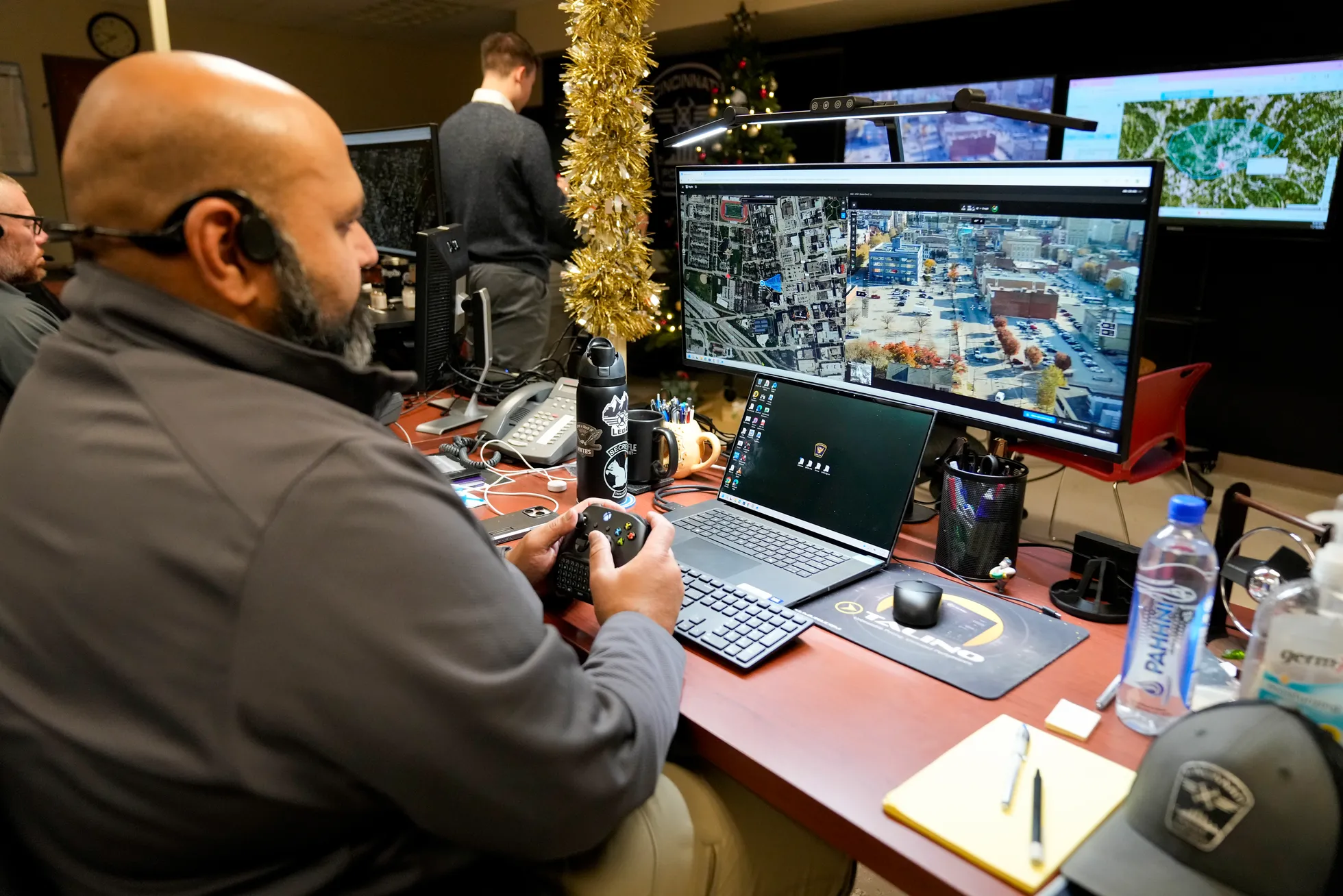 Police Specialist Matthew Martin pilots a Skydio X10 drone from his desk inside the command center at the Cincinnati Police Department District 1 headquarters in Cincinnati on Nov. 13. Sam Greene/The Enquirer
While police taking to the sky isn’t new – departments have long used helicopters and in the past decade added drones to the mix – Cincinnati’s program is using drones as first responders. The department is the first in the Ohio to do so and is among a growing number nationwide.
An Enquirer analysis of drone flight records since its launch in July through early November found the program has relieved officers from responding to dozens of calls since it began, cut some response times in half and quickly become a core part of the city’s emergency response.
The program, expected to cost $4.8 million through 2033, is still in its infancy. There are nine drones piloted by a small group of officers, covering about half of the city, 24 hours a day when possible. By early next year, when another 13 drones are delivered, department leaders have promised nearly all of Cincinnati will be within reach of its drones.
Police officers have welcomed the drones, appreciating the aerial support in tense situations. One former police captain turned drone expert called them a game changer for law enforcement.
Still, some privacy advocates and citizens have expressed concerns about over-surveillance, excessive policing and “mission creep,” which is when a new program grows beyond its initial scope.
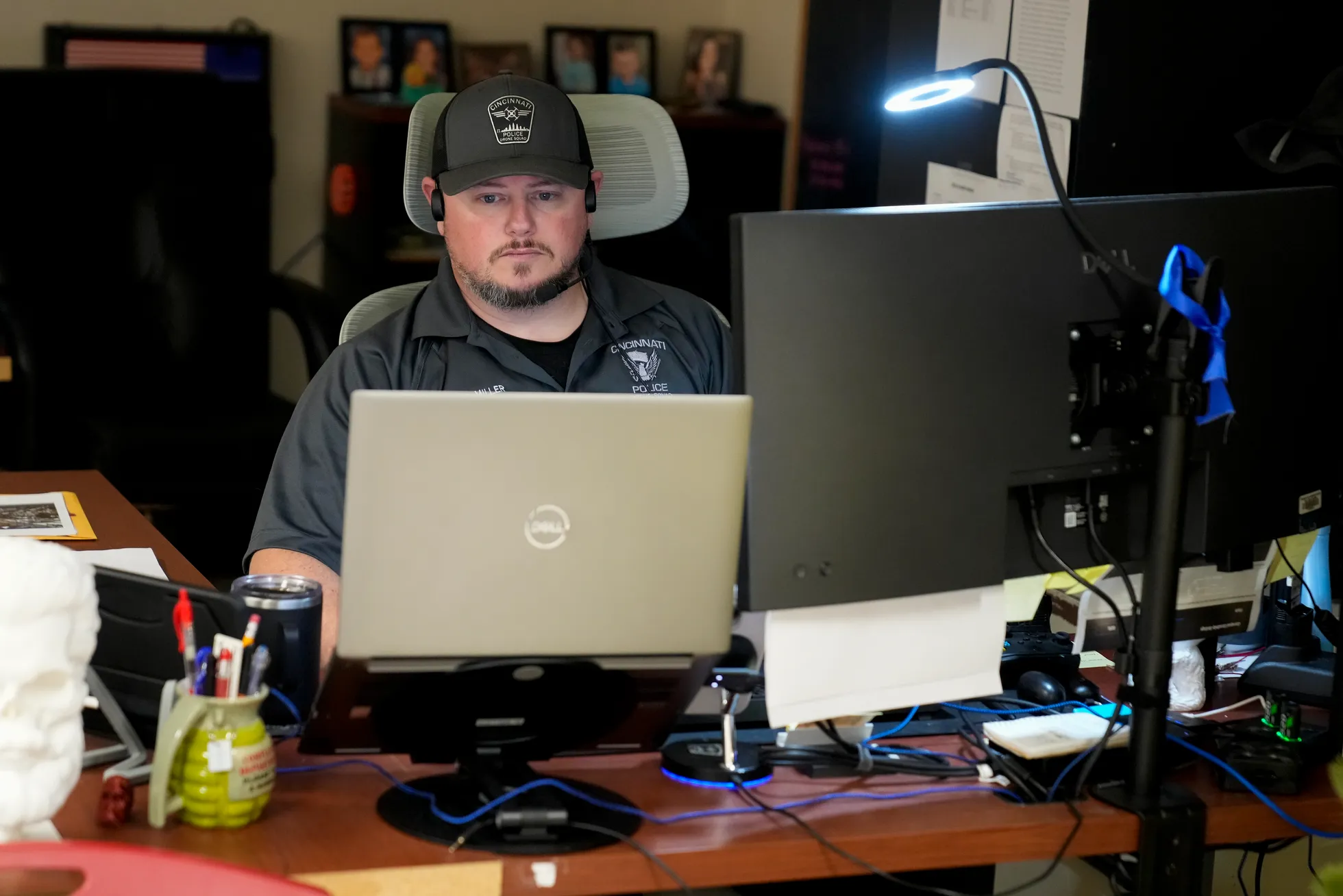 Officer Ben Miller commands a Skydio X10 drone from his desk at the Cincinnati Police Department District 1 headquarters in Cincinnati on Nov. 13. Sam Greene/The Enquirer
Inside the command center
“NO ENTRY EXCEPT BY ORDER OF CHIEF,” reads a sign outside the nondescript command center for Cincinnati’s drone squad at the District 1 station in the West End.
Inside the dimly lit command center, the police drone officers sit at their desks, with two rolling monitors in the front of the room. One shows a map of calls police are responding to, the other, a radar view of other aircraft flying near the command center.
It’s quiet, besides the hum of police radios and the clicks of controller joysticks.
“Is there a drone on the channel?” an emergency dispatcher sounds out over the radio.
Sgt. Jay Kemme, a 17-year officer with the department who was hand-picked to get the drone program in flight, takes his radio off his belt and calls in that he’s available.
A residential alarm is going off at a home in East Price Hill.
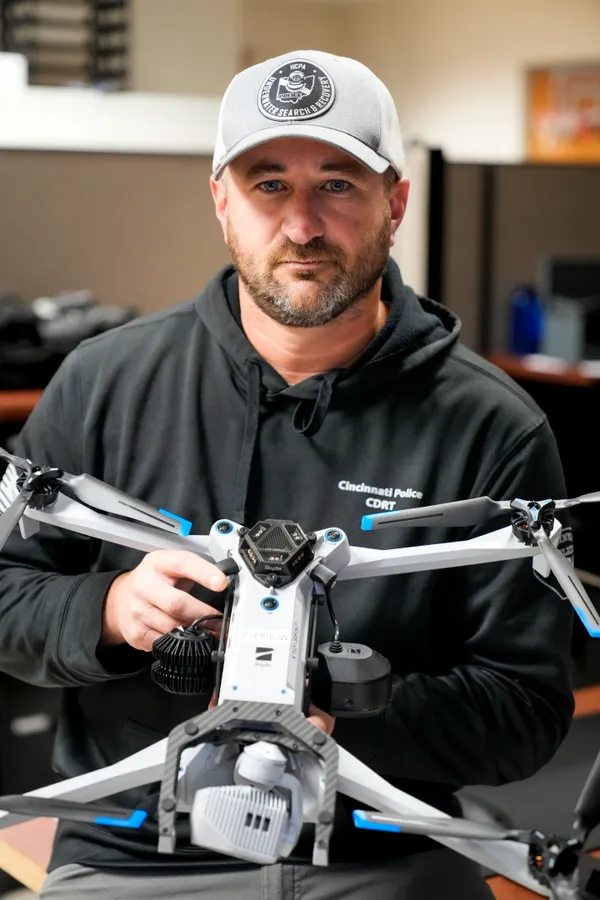 Sgt. Jay Kemme holds a Skydio X10 drone used by the department’s Drone Squad at the Cincinnati Police Department District 1 headquarters on Nov. 13. Sam Greene/The Enquirer
“Ninety percent of the time it’s a cat breaking something, or a window open, but you just don’t know,” Kemme said. “So we’ll go there.”
With a scroll and a few clicks of his mouse, Kemme finds the alarm call and hits launch. The drone takes off from a dock across town in West Price Hill and begins piloting itself toward the home.
The drone, a Skydio X10, is built to perform under pressure. It can fly at up to 45 mph using AI technology to avoid obstacles in its path. A live feed with the drone’s camera broadcasts itself to Kemme’s screen.
“As part of our training, (Skydio) wanted us to try and fly into anything. And you can’t do it,” Kemme said. “We spent an hour trying to crash one of these. You can’t do it.”
Less than a minute later, the drone arrives above the house. Its autopilot gracefully pauses into a hover. Kemme takes the controls – a black Xbox One controller with keyboard – and begins flying around the house, looking for signs of a break-in.
Officers soon arrive on scene and begin poking around. Kemme calls into dispatch that he’s leaving and hits a button to send the drone back home.
“I’m 2-6,” he says, using the police code for clearing a scene.
 Police Specialist Matthew Martin uses an Xbox gaming controller to pilot a Skydio X10 drone from his desk inside the command center at the Cincinnati Police Department District 1 headquarters on Nov. 13. Sam Greene/The Enquirer
Short on officers? Send a drone instead
Many residential alarms are flukes. Of the more than 1,000 calls Cincinnati dispatch gets a day on average, a large swath are for mundane issues that take up officers’ time with low results: suspicious people that are gone by the time an officer arrives, a traffic hazard that was overstated or a 911 hang up from a “butt dial.”
The drone squad now handles many of those calls, which tend to hang toward the bottom of the priority list for officers, especially when it’s busy. In dozens of those calls, the drone responding was able to eliminate the need for an officer to respond at all.
When a drone responds on its own and an officer isn’t needed, calls are closed out quicker and sometimes take half as long, according to an Enquirer review of dispatch data.
In recent years, Cincinnati police have been battling an officer shortage. As of early November, the department remains about 15% short of its budgeted complement of 1,091 officers.
With fewer officers and growing call volume, Kemme said, the drone program can take some pressure off officers.
The drone squad has also been responding to high-priority calls, according to an Enquirer review of flight paths. A drone was in the air within minutes after four people were shot outside an Over-the-Rhine bar in early November. Drones have been flown out to dozens of times gunshots are heard by ShotSpotter, a network of microphones that detects gunfire. And occasionally, the drone team has been on the frontlines, helping officers deal with calls for mental health crises.
In one case, Kemme said a suicidal man’s phone was pinging near the river. The man’s mother had told police he was known to carry a knife. The team sent a drone to keep an eye from above, relaying information to officers who held back until mobile crisis responders arrived.
“Our goal is to get there as fast as we can and give real-time intelligence back to the cops. Give them a real-time video feed. And if we can intervene or we can help in any way with a citizen in distress, that’s the goal,” Kemme said. “We’re there quick.”
A slippery slope for surveillance
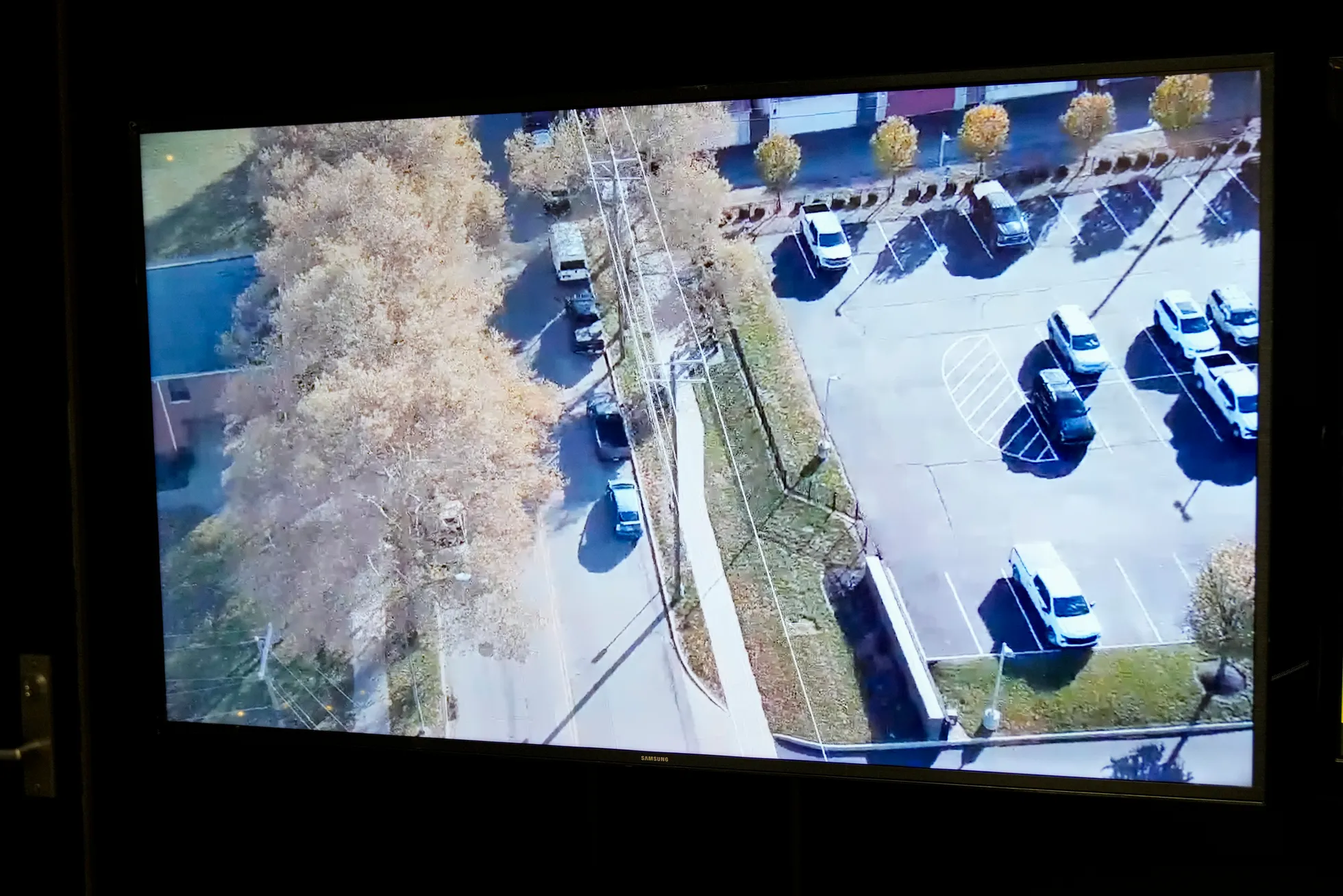 A live monitor shows the camera view of a Skydio X10 drone piloted by a Cincinnati Police officer from the department's District 1 headquarters on Nov. 13. Sam Greene/The Enquirer
The ease of popping a drone into the air raises concerns among privacy advocates like Beryl Lipton, a senior investigative researcher at the Electronic Frontier Foundation.
Lipton said drones as first responder programs can be a slippery slope toward over-surveilling neighborhoods, particularly when there's a disconnect between it being just a tool versus a "flying cop." Drones can access places people might have a reasonable expectation of privacy, like a backyard, she said.
"If there's a drone overhead, you don't really know whose drone that is. You don't really know what it's capturing," Lipton said. "You don't really know how that's going to be used or used against you later on, even though you're not doing anything wrong."
That's a concern shared by some Cincinnati residents who spoke with The Enquirer. Many were unaware the police department had begun flying drones overhead. Some who were aware said they had wondered to what the drones were responding.
When the drone program was announced in June, Mayor Aftab Pureval said “there will not be drones overhead in Cincinnati streets 24/7.”
While the program began only during daytime hours, in the past month the drone squad has begun staffing at all hours. Dispatch data shows drones have conducted numerous directed patrols across Over-the-Rhine and the West Side.
Kemme said these patrols involve drones flying over the area, looking for trouble and providing a deterring presence for any possible criminals.
"We want you to see it, right?" Kemme said. "So you're out trying to steal from cars, you look up and go, 'Oh, there's a police drone. Maybe I shouldn't do this here.' Kind of like a police car at the intersection. Same idea."
Maurice Wagoner, president of the Over-the-Rhine Community Council, said he has privacy concerns with drones lingering above his home.
“I don’t want to be sitting in my backyard with my boxers on and catch a drone looking down at me from the sky,” Wagoner said.
Steve Saunders, a retired Cincinnati police captain and drone expert who has called the programs a "game changer," said drone patrols are no different than those using helicopters.
“What’s happening in the public space is available for people to see, including government,” Saunders said. “And we’ve been doing it for years.”
Still, Lipton, who also conducts data analysis on police misconduct for The Enquirer's parent company USA TODAY Co., said she has concerns about how the data from drones could be linked to other systems, like license plate readers or AI facial recognition.
Lipton said dispatching drones to ShotSpotter activations, as flight records show Cincinnati police are doing, can lead to over-surveillance of communities that happen to have a higher concentration of those microphones.
Flight paths show drones have responded to hundreds of calls in Over-the-Rhine, specifically north of Liberty Street, a hotspot that police promised to target after a spike in crime this summer.
Ken Kober, Cincinnati’s police union president, dismissed concerns about surveillance. He said the drones are not flying around for no reason.
“You can’t walk out of your house without being recorded by 10 cameras anyway,” Kober said. “What’s the difference if you have one in the air that’s doing it?”
‘Future of law enforcement’ growing in Ohio, nationwide
 The Cincinnati Police Drone Squad patch on a hat at the District 1 headquarters on Nov. 13. Sam Greene/The Enquirer
Cincinnati police are not the only department using drones as first responders.
After the Federal Aviation Administration loosened rules in May, the number of programs jumped to nearly 600 in four months, according to the University of Virginia’s Center for Public Safety and Justice. There had been just 50 programs started in the six years before the rule change.
Earlier this year, the Ohio Legislature earmarked $2.5 million for the Ohio Department of Transportation to partner with municipalities across the state for a pilot program. Departments in Louisville, Oklahoma City and elsewhere have also taken steps to launch their own programs.
“It is the future of law enforcement,” Kober said.
As Cincinnati's drone squad plans to add more docks to its fleet in the coming months, the program is far from the finish line.
“This is like the iPhone 1. It’s great, it’s amazing, but it’s just going to grow,” Kemme said. “We have the iPhone 1 in our possession. And it’s only going to get better.”
Cincinnati police will have 22 drones in its fleet. How much does the program cost?
Nov. 30, 2025 | OriginalGetting an eye in the sky on a pursuit, a search for a missing person or other incident has never been cheap – whether it’s been with police helicopters or drones.
For years, Cincinnati Police Department has worked with the Hamilton County Sheriff’s Office and other agencies to get a helicopter in the sky when deputies need aerial assistance.
However, compared to a helicopter, getting a drone in the sky is easier to launch and pilot in a time-sensitive situation, Hamilton County Sheriff’s Lt. Steve Sabers said.
That’s why, in a sign of the times, the sheriff’s office sold its helicopters two years ago and has begun to replace them with drones.
Generally, helicopters are more expensive than drones when accounting for labor, maintenance and fuel, Sabers said. But drones are not cheap, either.
The sheriff’s office sold its two helicopters for about $670,000 apiece. For Cincinnati police, an Enquirer estimate found that each of its drones costs around $62,343 all-in, including the price of its dock, accessories, training, warranty and maintenance.
Before the sheriff’s office sold its helicopters, it was paying about $400,000 in upkeep each year. Cincinnati police will pay more than that – about $450,000 a year for the drone system software and maintenance – but for a fleet of 22 drones, according to a copy of the contract obtained by The Enquirer.
There are also additional costs that come with piloting remote drones.
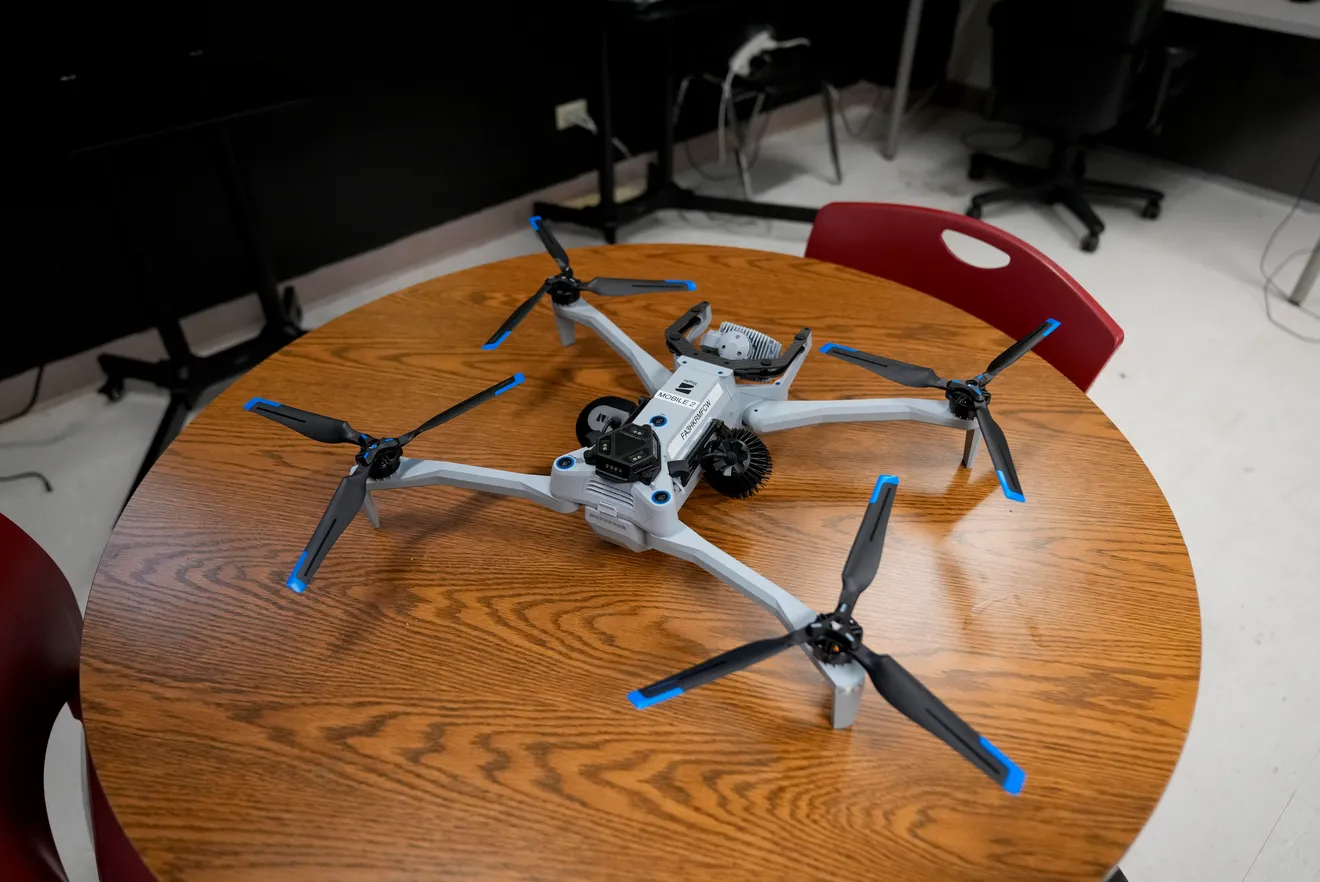 A Skydio X10 police drone at the Cincinnati Police Department District 1 headquarters on Nov. 13. Sam Greene/The Enquirer
The Federal Aviation Administration typically requires pilots keep their drones within visual line of sight, unless they receive an exception from doing so.
Cincinnati police pilots have received that exception, but to stay away from other flying objects, a $250,000 per year Dedrone radar is required.
If there are damages to the drone or if its parachute is deployed, Skydio covers most of the repairs under warranty, Cincinnati police Sgt. Jay Kemme said. Earlier in November, Kemme said a hawk struck one of the Skydio drones near Glenway Avenue and the parachute deployed. The drone gently landed in the road and a patrol officer retrieved it.
All of the drone technology is bundled together as part of a contract with Axon, which is one of the nation’s leading providers of police equipment like Tasers, body cameras and more. The latest contract makes Axon the single largest vendor Cincinnati police work with on an annual basis.
What's that drone? Look up Cincinnati police flights near your home
Dec. 11, 2025 | OriginalWhen a Cincinnati police drone is flying overhead day or night, it's not always clear what it's responding to.
The flights are part of the Cincinnati Police Department's new $4.8 million "drones as first responders" program, which has quickly become a core part of the city’s emergency response since launching in late July.
The drones are always recording and equipped with high-quality zoom and thermal cameras as a Cincinnati police officer remotely pilots the drone from the department's command center.
An Enquirer review of the more than 4,000 flights so far found drones have helped officers apprehend suspects, been first on the scene of shootings and performed aerial patrols across neighborhoods such as Over-the-Rhine.
Generally, there are few restrictions on police drones when it comes to citizens' privacy since the technology is so new, according to Electronic Frontier Foundation senior researcher Beryl Lipton.
A proposed bill in the Ohio Statehouse would add requirements for police to get warrants for some flights, like when observing the inside a home through a window.
Check for drone flights near your address here
Cincinnati police publish drones' flight paths online a day after takeoff. However, there's no information immediately available about the purpose for each flight.
Using The Enquirer's interactive "What's That Drone?" tool, you can learn more about Cincinnati police drone flights near your address.
The data refreshes daily with the previous days' flights, excluding weekends and holidays.
How it works
Since the program launched July 28, The Enquirer has downloaded all of the flights by the Cincinnati Police Department.
By combining the database of flight paths with a database of calls police have responded to, The Enquirer's tool is able to approximate the call for service the drone responded to on a particular day and time in a particular location.
Simply put, if a drone responds to an area in which there is only one call for service at a specific time on a specific day, the tool extrapolates that is the call the department was responding to.
Not all flights are matched with calls. Sometimes, during busy hours, there could be multiple calls in one location, making it difficult to pinpoint which call the drone was responding to.