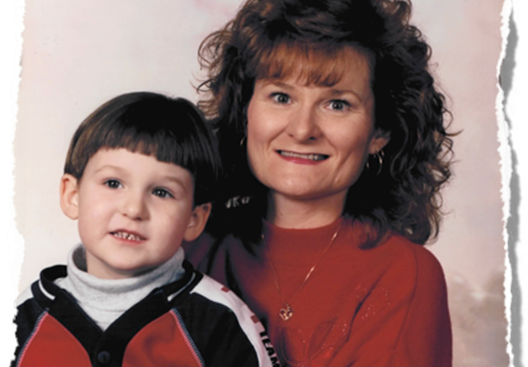
 When Susan Sachs' son, Michael, was diagnosed with autism as a child, there were no services in South Carolina for children on the spectrum. She co-founded Project Hope with the mother of another child with autism 26 years ago, and Michael, now 31, spends his days learning communication and job skills at the Project Hope Foundation, which has eight locations, with a Clemson-Central facility set to open later this year.Special to The Journal
'Across the spectrum'
Autism nonprofit nears opening of Clemson-Central facility
May 3, 2023
CLEMSON, S.C. — Michael Sachs wakes up every morning at 6:30 a.m., catches a bus and spends his day learning communication and job skills at the Project Hope Foundation.
He was diagnosed with autism as a child. The foundation's Woodruff facility encapsulates a real home, with bedrooms, showers and more, so clients can practice daily skills such as washing windows and folding laundry in a controlled environment.
Michael's mother, Susan Sachs, co-founded Project Hope 26 years ago with Lisa Lane, another mom of a child with autism.
"As a mom, I would have driven my child anywhere to get this," Sachs told The Journal in an April interview.
When the foundation first opened in 1997, there were no services in South Carolina for children on the spectrum, Sachs said. At the time, there were a mere 20 providers in the whole country. With a small budget and smaller staff, Project Hope started as a preschool in a shared space at a Simpsonville church.
Now, Project Hope is one of the largest autism service providers in the state, with eight locations and a new Clemson facility opening later this year.
New facility to help both families and community
The Clemson-Central facility, at 915 W. Main St. on Old Greenville Highway, will provide speech and applied behavior analysis (ABA) therapies, a behaviorally based approach that helps clients become more independent by positively reinforcing good actions.
"There are very few who are just like us: across the spectrum, across programs, across needs," Sachs said. "Our mission is a lifespan of autism services."
Clients range in age from 2 to 50 years old, director of services Mark Knight said. Many clients come for the foundation's ABA, occupational, speech and language therapies, but Project Hope also helps educate children through partnerships with local schools and its own school, Hope Academy.
"There are those who use communications devices to be able to communicate and talk, and then there are those who drive themselves to our programs," Knight said. "It's a wide spectrum, and we serve all those different needs."
For adults with autism, the foundation also provides a handful of day services, career prep, employment and ABA therapy. On-site and in-house, there is also a digital shirt-printing business that gives adults the chance to work in a position that fits them and their needs.
Project Hope does have a presence in Pendleton, but those clients will shift to the Clemson-Central location. A major indoor renovation has been underway for months, and Project Hope officials aim to have it complete in the second half of this year.
Although located in Pickens County, Sachs said Project Hope is looking to help anyone in the area who needs it — families, schools or churches just need to reach out.
Keeping up with demand: Autism rates on the rise
About one in 36 children has been diagnosed with autism, according to a 2020 estimate by the Centers for Disease Control and Prevention. It's an increase from estimates of one in 44 in 2018 and one in 150 in 2000.
"Once you feel like you're making some headway, then they come up with a new prevalence rate," Knight said of the increase in demand for autism services.
Finding certified behavior analysts to work with clients introduces a bottleneck, Knight said. Since few organizations hire such a role and the nature of the work often requires that children are one-on-one with the analysts, it can be difficult to staff the nonprofit at times.
However, Sachs and Knight said creating continuity for parents to know their child will get the support they need makes the work rewarding.
When asked to do chores around the house, Michael, now 31, jokes with his mom about it being like "living in an apartment" — aware he will need to live alone one day. Sachs worries about him, but said she knows Project Hope will ensure he is cared for and in a safe, nurturing environment.